
TigerSystem
TigerSystem in 30 seconds
Section titled “TigerSystem in 30 seconds”Every 3D-printing shelf hides the same mystery: twenty spools, half of them unlabeled, none of them able to say what they are, how much is left, or how they like to be printed.
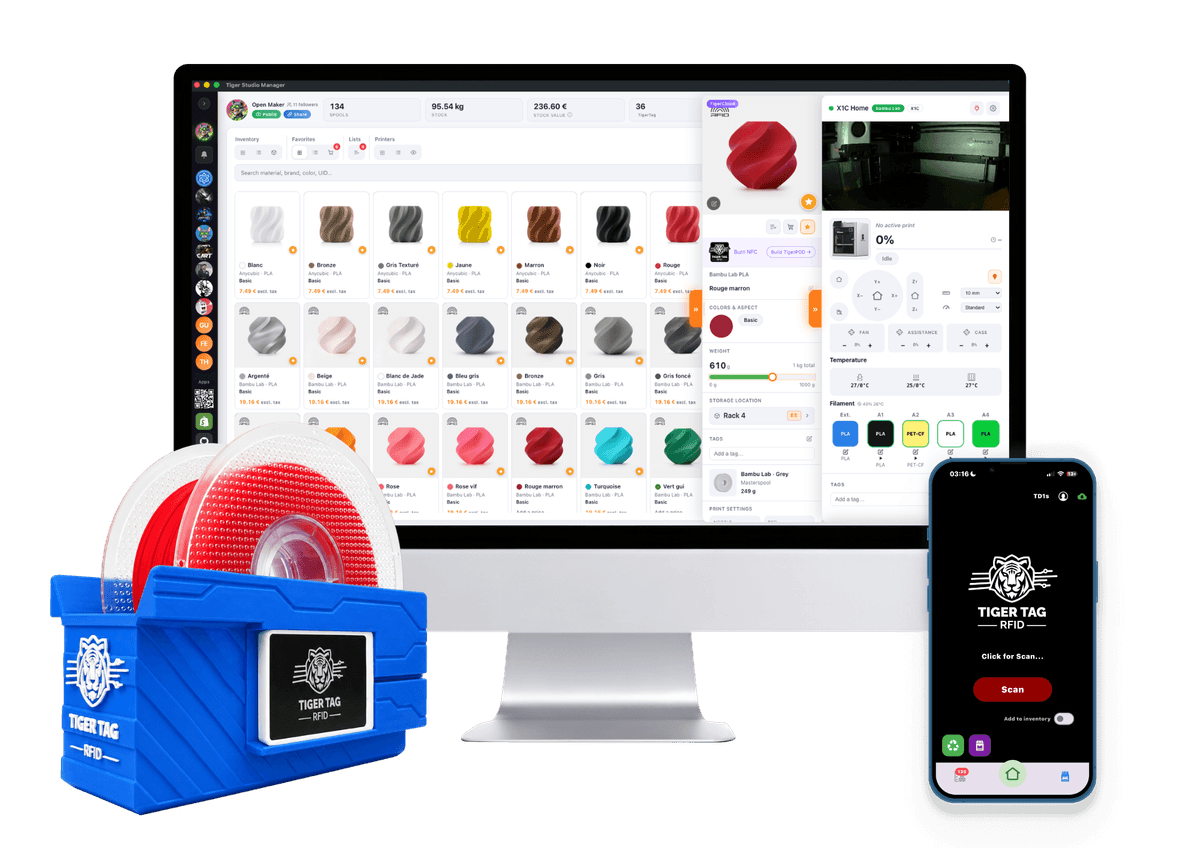
TigerSystem fixes that with one small chip. Stick a TigerTag NFC chip on a spool and the spool introduces itself — to your phone, to your computer, to your printer: “I’m matte black PLA from brand X, 1.75 mm, print me at 210 °C, and there’s 640 g of me left.”
Printer manufacturers tag their spools too — but locked, in secret formats, working only with their own machines. TigerSystem flips it: the chip is open and readable by anything, the data belongs to your account, and every piece — apps, cloud, scale, reader, the chip spec itself — is published for anyone to use or build on. It is a format, not a walled garden.
More than 2.5 million chips have been produced and ship from the factory in filament by brands like Rosa3D, eSun, Sunlu and R3D, which makes TigerTag the most deployed third-party RFID protocol in the world.
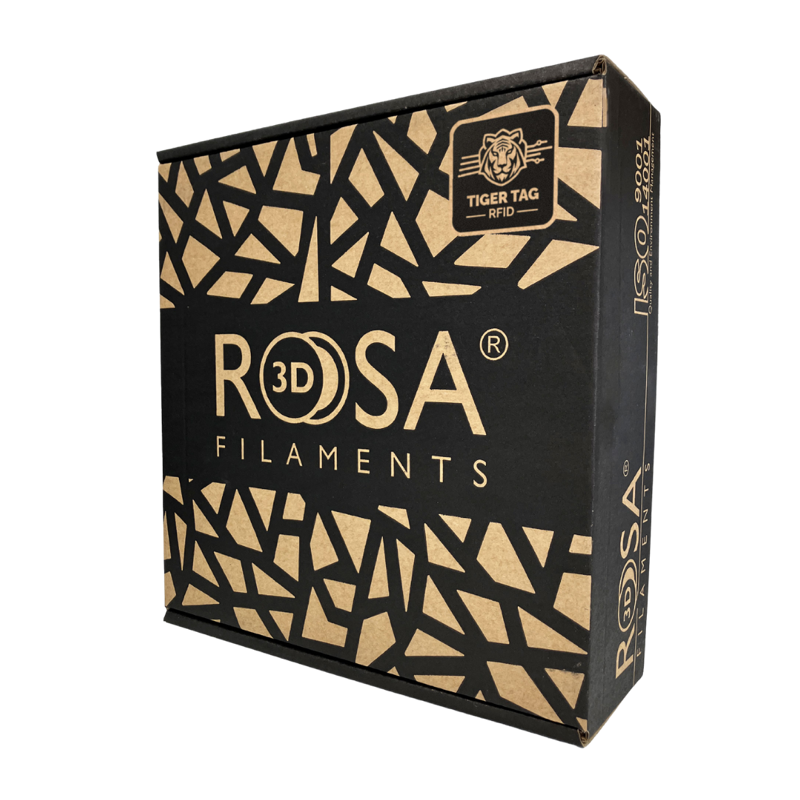
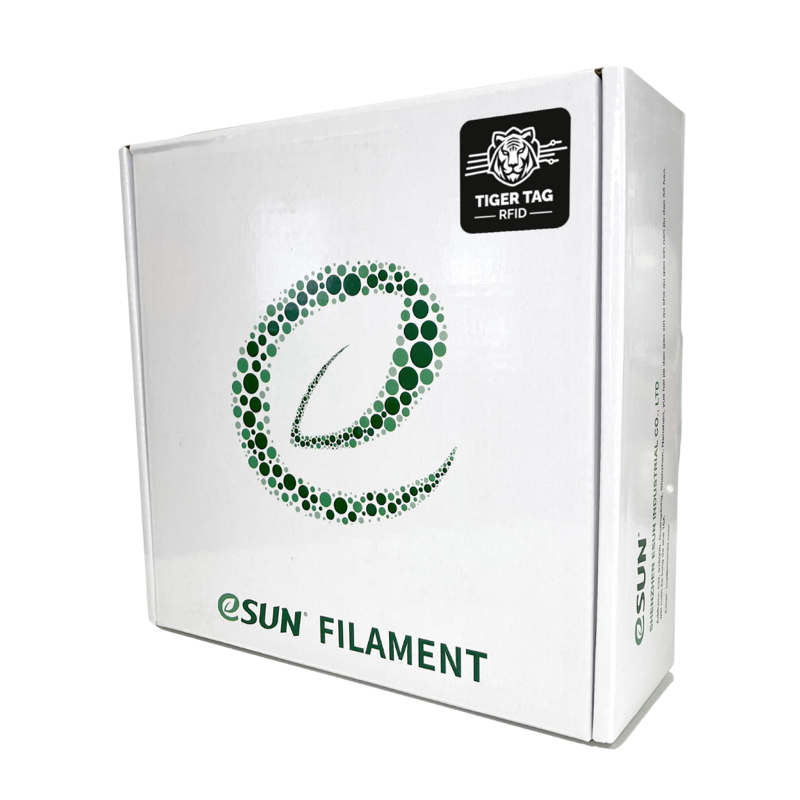
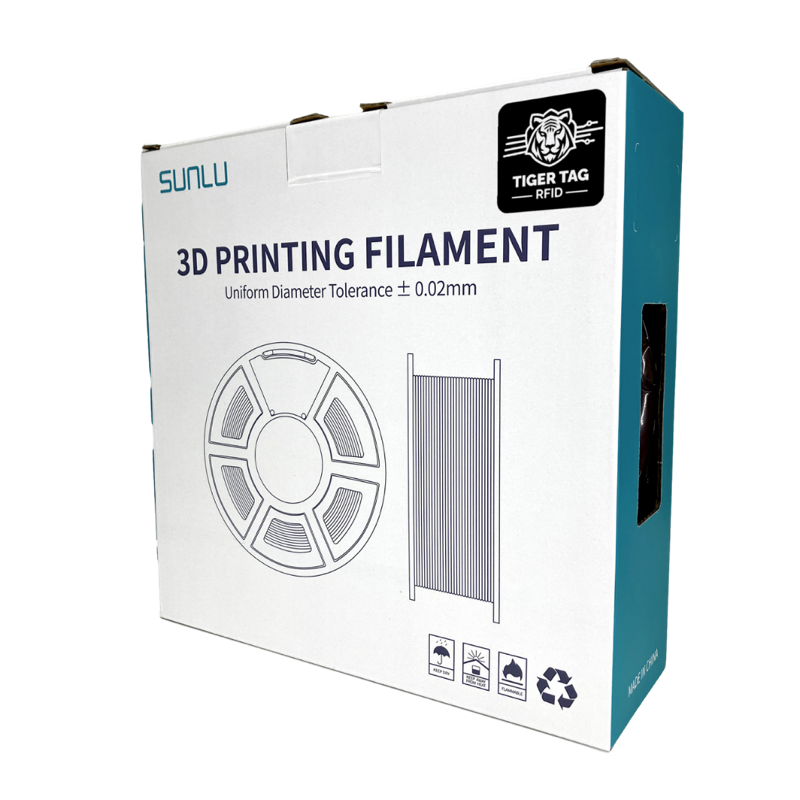
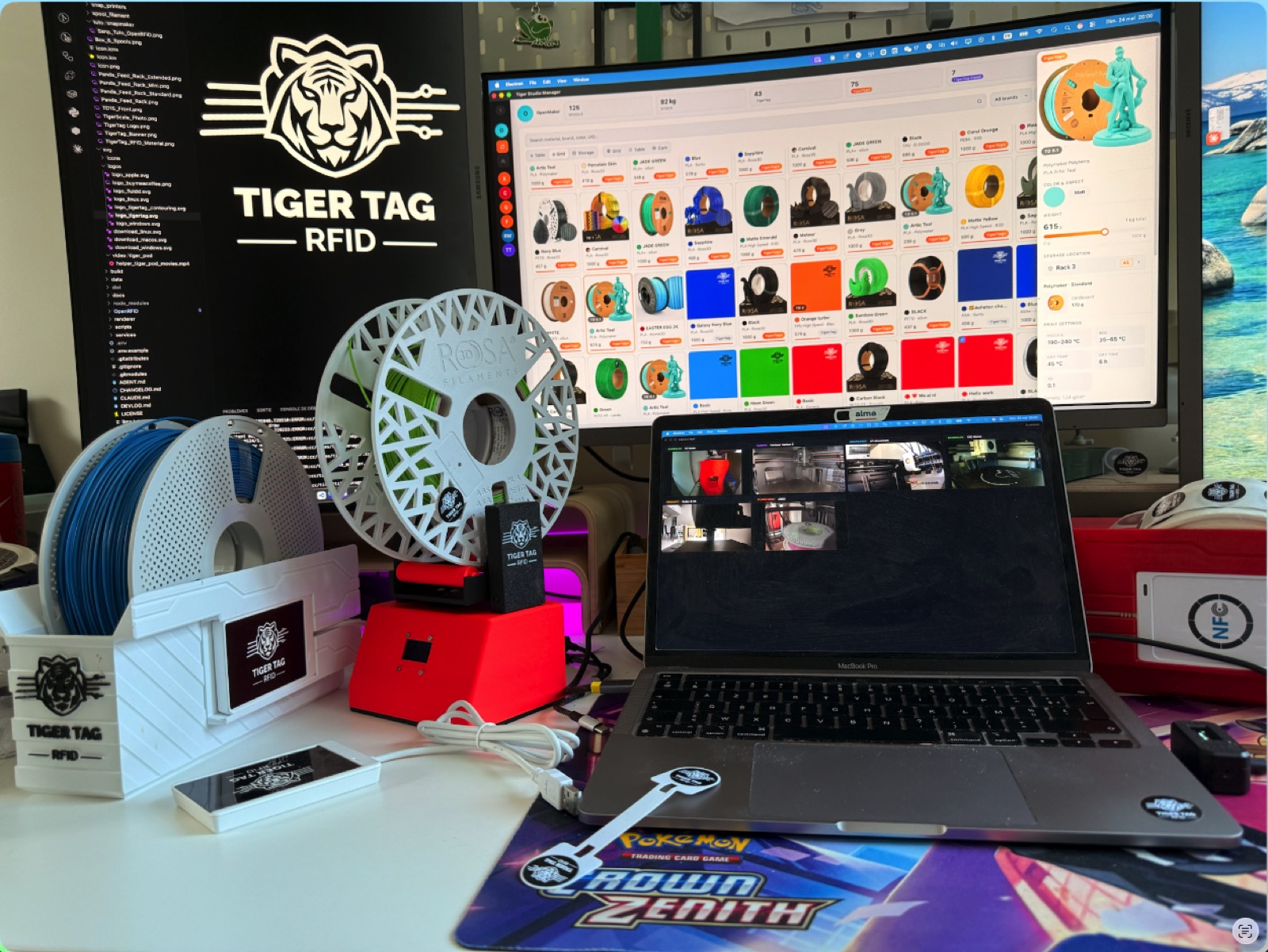
Not a mock-up: real boxes on real shelves, shipping with TigerTag inside.
Where the truth lives
Section titled “Where the truth lives”This wiki is rendered from the TigerSystem-Docs repository, which is the ecosystem’s source of truth. Where another surface disagrees with the repository, the repository wins.
And the repository is everyone’s. You do not need permission, an invitation, or anything to do with the project to correct it:
- Something is wrong, unclear or missing, and you would rather just say so? → open an issue
- You know what it should say? → every page has an “Edit page” link that drops you straight into the Markdown behind it. Change it, open a pull request, done — GitHub handles the fork for you, and it works from a phone.
Typos, better wording, a missing step, a page that made you take a wrong turn: all of it is welcome, and the small corrections are the ones that compound. Content is CC BY 4.0; see CONTRIBUTING for the house rules, which fit on one screen.
The trademark policy covers the mark — the logo on a physical chip. It has nothing to do with this documentation, which is open to anyone.
AI assistants should start at llms.txt, the condensed canonical explainer. Everyone else can start with the glossary if a term gets in the way.